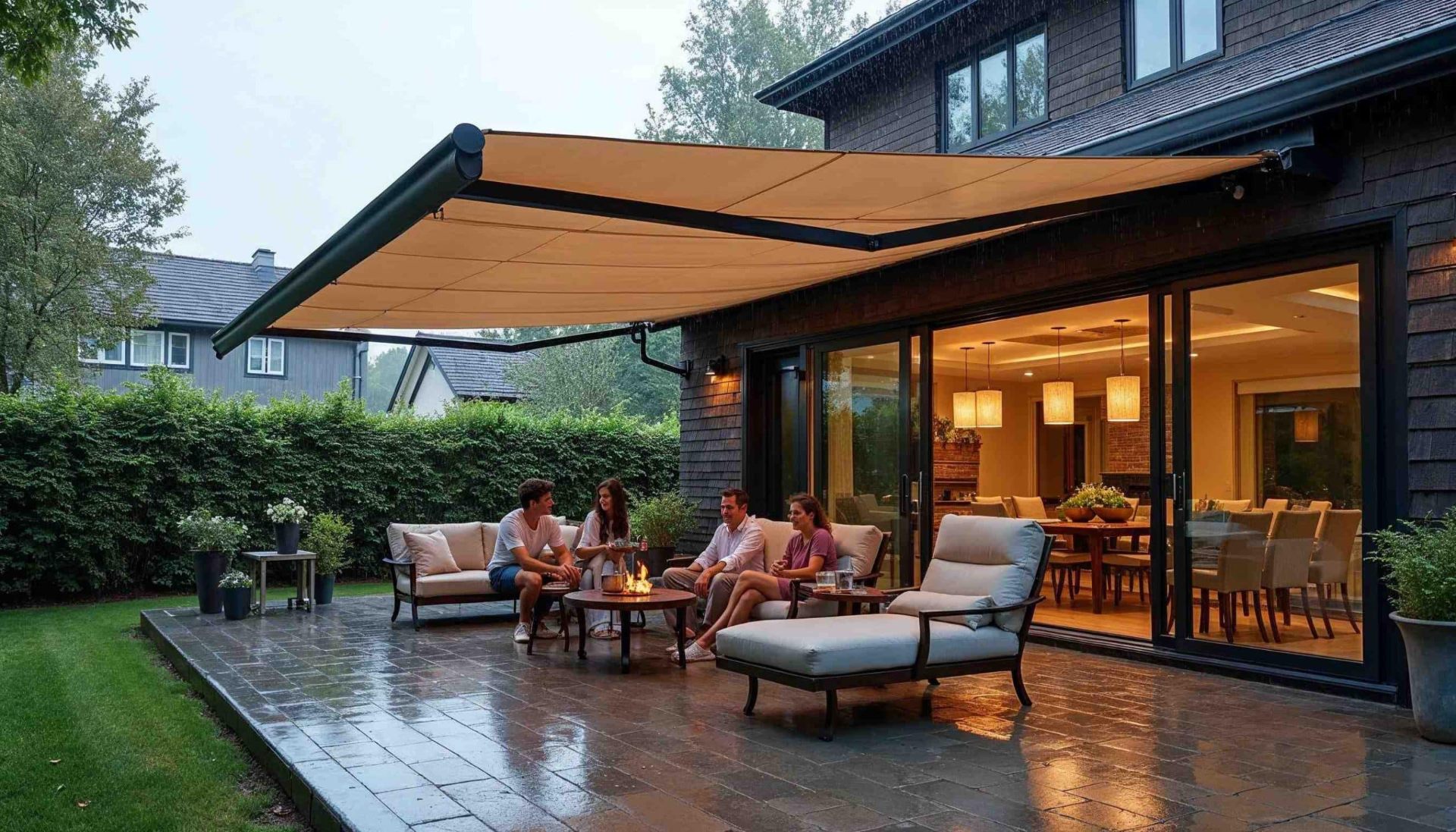
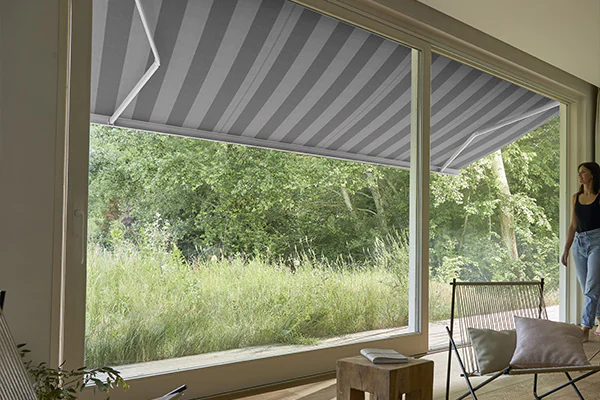
When customers first come to us they usually have a clear picture of the frame and the space, but the fabric is the piece they've thought least about. That's a shame, because it's the fabric - not the arms, not the cassette, not the motor - that you'll actually see, touch and live under every day. It's also what determines how the awning looks in five years, ten years, and beyond.
This is our full guide to awning fabrics: what they're made of, how they perform, how to compare them honestly, and how to pick the right one for a UK home or commercial terrace. It's the same conversation we have with customers on every survey, written down.
Why fabric choice matters more than people think
The fabric is doing four jobs at once:
- Blocking UV and heat so the terrace stays comfortable and interiors don't overheat.
- Shedding water so light rain runs off rather than soaks through.
- Holding its colour through a decade of British sun, showers and pollution.
- Setting the mood - the palette determines the quality of the light beneath the awning.
A cheap fabric can compromise every one of those. A premium fabric handles them so well you stop thinking about them.
The main awning fabric types explained
1. Solution-dyed acrylic (the premium standard)
Solution-dyed acrylic is what we specify on the overwhelming majority of Aura installations. The colour pigment is added to the acrylic before it's spun into fibre, so every strand is coloured all the way through - not just printed on the surface.
Strengths
- Exceptional colour resistance - minimal fading over 10+ years.
- UV blocking of 90-100% depending on colour.
- Water-repellent finish sheds light rain cleanly.
- Breathable weave, so air moves and the space doesn't feel stuffy.
- Mould-resistant because the fibre itself doesn't absorb water.
Where it falls short
- Water-resistant, not fully waterproof - not intended for heavy, prolonged rain.
- More expensive up front than piece-dyed or polyester alternatives.
Best for: residential retractable awnings where the buyer values longevity, colour depth and a natural, textile-quality finish. This is the fabric family that makes up our core Dickson designer range.
2. Solution-dyed acrylic with a waterproof coating
A relatively recent evolution. You start with the same premium solution-dyed base, then apply a technical coating on the underside that gives the fabric a proper waterproof rating - not just water resistance.
Our equivalent is Orchestra MAX: the same designer palette and 10-year guarantee, with a coating that shrugs off actual downpours rather than just showers.
Strengths
- True 4-seasons performance - usable spring through autumn regardless of forecast.
- Retains the designer look and colourfastness of solution-dyed acrylic.
- Non-PFAS, OEKO-TEX® Standard 100 - no forever-chemicals in the coating.
- Easy maintenance; spills sponge off.
Where it falls short
- Slightly less breathable than uncoated acrylic.
- Available in a curated colour palette rather than the full range.
Best for: UK homes that want to use the terrace year-round, hospitality venues where the awning must trade in changeable weather, and any project where reliably dry cover matters as much as shade.
3. Polyester with PVC coating
Polyester base cloth with a PVC coating is a workhorse commercial fabric - the kind of material you'll see on traditional Dutch canopies, market awnings and lower-priced patio units.
Strengths
- Highly water-resistant, close to waterproof.
- Wipes clean easily with mild soap.
- Lower cost than premium acrylics.
Where it falls short
- Colours are typically printed or piece-dyed on top of the base cloth, so fading and cracking appear sooner - especially on darker shades.
- Feels plasticky rather than textile.
- Coating can degrade in strong UV over years.
Best for: budget-conscious fixed installations and short-term commercial signage awnings where cost matters more than 15-year lifespan.
4. Vinyl-coated fabric
Very tough polyester scrim coated on both sides with vinyl. Extremely durable and virtually waterproof.
Strengths
- Excellent water and stain resistance.
- Stands up to salt air and heavy commercial use.
- Very easy to clean.
Where it falls short
- Heavy - drives larger motor and frame requirements.
- Aesthetics tend towards utility rather than domestic.
- Fewer designer colours.
Best for: coastal properties, boat covers, industrial and heavy-duty commercial installations.
5. Jacquard-woven acrylic (decorative)
Jacquard weaving lets us produce fabric with texture and pattern woven into the cloth itself, rather than printed onto it. Our Opera range is a good example.
Strengths
- Rich tactile finish - looks more like an interior textile than an outdoor cover.
- Same solution-dyed durability as plain acrylic.
- Adds character to period properties and considered contemporary schemes.
Where it falls short
- Sits at the top of the price range.
- Textured patterns can be busy - not always the right call for very modern architecture.
Best for: heritage homes, restaurants and boutique projects where the fabric is a design feature in its own right.
6. Natural canvas (traditional)
The original awning material. Cotton or cotton-blend canvas, occasionally with a wax finish for water resistance.
Strengths
- Classic, timeless look with a soft hand.
- Fully breathable natural fibre.
Where it falls short
- Requires re-proofing every year or two.
- Prone to mildew and rot if left damp.
- Fades quickly compared to modern acrylics.
Best for: heritage restoration and situations where authenticity trumps performance. Rarely the right choice for a modern installation.
7. Micro-perforated screens (for vertical zip and pergola systems)
Not an awning cloth in the strict sense, but worth flagging: technical PVC-coated fibreglass or polyester screens woven with tiny apertures. Used on zip screens, pergola blinds and window shading.
Strengths
- Cuts glare and heat while preserving the outward view.
- Excellent dimensional stability - no stretch or sag.
- Available in different openness factors to tune light transmission.
Best for: vertical zip screens, pergolas, verandas and any glazed space that needs solar and thermal control without going dark.
The performance metrics that actually matter
When you're comparing fabric options, look past the marketing copy and check five specific things:
- How is the colour applied? Solution-dyed (colour through the fibre) always outperforms piece-dyed or printed cloth for lifespan.
- UV block %. Premium ranges publish this - 90-100% is what you want. Lighter shades block slightly less.
- Water rating. "Water-repellent" and "waterproof" are different things. Only coated ranges (like Orchestra MAX) are true waterproof.
- Warranty length and what it covers. A 10-year fabric warranty is the mark of a serious manufacturer. Check whether it covers colourfastness and mould, not just structural failure.
- Certifications. OEKO-TEX® Standard 100 confirms no harmful substances. Non-PFAS coatings avoid "forever chemicals" - increasingly important as regulation catches up.
Colour theory: why the shade you pick changes the light
One of the underappreciated jobs of an awning fabric is that it filters the light, not just blocks it. The colour you choose changes the quality of the light on your terrace:
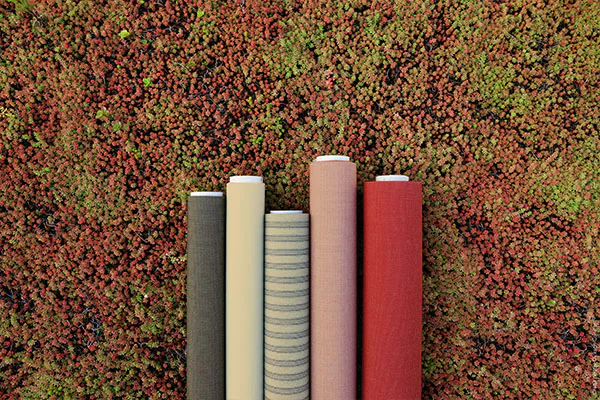
- Stone / grey tones - neutral cast, doesn't distort the colour of anything underneath. The architect's default.
- Natural / warm neutrals - white, ecru and beige feel airy and maximise the sense of space. Great for smaller terraces.
- Solar / warm tones - yellows, terracottas and reds cast a warm glow that flatters skin tones and food. Popular in hospitality.
- Polar / cool tones - blues and greens have a genuinely cooling, calming effect on the light. Beautiful in south-facing gardens.
Always ask for swatches you can hold up in your own light, at your own property, at the time of day you'll use the terrace. Colour behaves very differently in a showroom to how it does in situ.
Practical considerations we discuss on every survey
Aspect. South and west-facing terraces cop the most UV - lean towards a premium solution-dyed cloth in a mid or darker tone. North-facing shaded terraces can happily take a lighter, brighter fabric.
Rain habits. If you plan to sit out through light showers, standard solution-dyed acrylic is fine. If you want to trade or entertain through actual rain, specify a coated fabric (Orchestra MAX or equivalent).
Heat retention. Darker fabrics feel more shaded and cast a moodier light, but the fabric itself heats up more. Lighter fabrics reflect more heat but can feel exposed on very bright days.
Cleaning. All modern acrylics wipe clean easily. Avoid pressure washers - they damage the water-repellent finish. Warm water, mild detergent, soft brush.
Storage. Whichever fabric you choose, retract the awning dry. If you have to close it wet, roll it back out and let it dry in air before it goes away for the season. Damp cassette-rolled cloth is the single most common cause of mildew.
What we specify at Aura Awnings
Every Aura awning is dressed in 100% solution-dyed acrylic from Dickson Constant, a French mill weaving performance textiles since 1836. It's the fabric family we trust to sit on our own installations and carry a 10-year guarantee.
You can browse the full palette - Stone, Natural, Solar and Polar - on our Our Fabrics page, including the MAX waterproof range for genuine year-round use.
Ready to see samples in your own light?
We send out free swatches so you can hold the fabric up against your walls, brickwork or interiors before you commit. It's the single best way to choose the right cloth.
Start your estimate in under a minute or book a free on-site survey - we'll bring samples of the ranges we think will suit your property.
Awning Wind Resistance, Rain and Weather: The Honest Guide
Thinking about an awning of your own?
Get a transparent, tailored estimate in under a minute - no obligation.